Showing posts with label Stephen King. Show all posts

Wednesday, August 30, 2023

Books I Read in August 2023

Five books and two novellas this month. Tomato Cain, Danse Macabre, and An Hour Before Daylight are books that I started months ago and just got around to finishing. 


The Word for World is Forest by Ursula Le Guin (Gollanz, 2015) First published in 1972.


Captain Don Davidson is the captain of a logging camp on the planet Athshe, also called New Tahiti. The planet provides materials for Earth which has lost its natural resources. Many of the peaceful natives of the planet are conscripted as “voluntary workers” and used as slave labor. While Davidson and the other loggers look down on the natives, the scientist Raj Luybov has built a relationship with one of them. This allows him to learn their language and study how they use dreams for healing and making decisions. After years of stripping forests there’s a native uprising. 


Captain Davison isn't a very complex character and comes across as a one-dimensional villain, but his way of thinking and the excuses he makes to justify his actions seem pretty familiar these days. Although the themes of colonialism and deforestation were not very subtle, I was still drawn in by the writing and characters, including the inhabitants of the forest world. Winner of the 1973 Hugo Award for Best Novella.


Tomato Cain and Other Stories by Nigel Kneale (Comma Press, 2023) First published in the Uk in 1949 and in the US in 1950.


A few years ago I watched a video of a speech Ray Bradbury gave to aspiring writers. One of the things he did in the speech was to recommend short story authors to read. One of the authors mentioned was Nigel Kneale, known for creating and writing the Professor Quatermass serials and movies. At the time I watched the video his work was out of print. That changed in 2022 with a new edition of Tomato Cain and Other Stories. It includes a new introduction by Mark Gatiss and collects all the stories from the original US and UK editions, plus three previously uncollected stories. The third uncollected story was discovered after the new edition was published and is now included in later editions. 


The stories are a mix of character, ghost, and horror stories, some experimental, many set on the Isle of Man, many involving animals somehow, and most ending with a final twist. It’s an interesting variety; some are lighthearted and humorous while others are quite dark and sad. The stories reminded me of three of my favorite authors, Roald Dahl, Fredric Brown, and Ray Bradbury. As with most collections, I enjoyed some stories more than others, but I was never bored, and I got something out of all of them.


The White Lion by Scott Oden


In the city of Acre during the last days of the Crusades, sword for hire Tancred of Antioch aka The White Lion, seeks revenge after his friend is murdered. This fast-paced novella is filled with action and intrigue and reminded me of the historical fiction of Harold Lamb and Robert E. Howard. 


One thing I would have liked is a short afterword with some historical background information. The ones included at the end of Bernard Cornwell’s Richard Sharpe novels always add to my enjoyment of the books. In any case this novella has reawakened my interest in the history of the Crusades. This was a quick and enjoyable read. I’m looking forward to the further adventures of the White Lion.


Xenia in the Court of the Winds: A Tale of the Ancient World by Scott Oden 


In this novella, Odysseus and the Cyclops Polyphemus are written as if they were historical figures. A young boy befriends an injured Polyphemus and brings him to his king. The story explores the concepts of the outsider, the monster, the hero, as well as the custom of xenia, “guest friendship” in the ancient world. The writing has a lyrical quality and reminds me of the historical fiction of Mary Renault.


Deliverance by James Dickey (Delta, 1994) First published in 1970.


I never watched the film adaptation, but I was aware of some of the plot details since the movie is so well known. Four middle aged men from the city go on a canoe trip in a remote area of North Georgia. The tension builds slowly at first but then really ramps up as they wind up fighting for survival. 


I wasn’t expecting to like the writing as much as I did, and I didn’t realize that James Dickey was not only a poet but a Poet Laureate. It explains his prose, which captivated me from the start. When reading about the author I also learned that he was passionate about archery, guitar, and white-water canoeing, all of which he put to good use in this novel. 


There are times when the author uses long sentences and paragraphs. Although I usually don’t care for that, the sentences flow here. Dare I say it, the story and the prose carried me as if I were white water rafting, alternating between moving slowly and effortlessly to plunging headlong between dangerous rocks. While parts were a real page turner parts were also descriptive and reflective.


James Dickey also wrote the screenplay for the film adaptation which I watched the day after finishing the book. The film follows the novel very closely and the cast is perfect. The minor changes, the direction, the visuals, the soundtrack, all bring the movie to the next level.


Non-fiction:


Danse Macabre by Stephen King (Berkley, 1983) First published in 1981.


In Danse Macabre, Stephen King discusses horror fiction in film, radio, television, and in print, focusing on 1950 to 1980. The book begins with a couple of introductory chapters on the basics of horror and an autobiographical chapter. I found the chapter on radio fascinating and the chapters on television and books interesting, but I felt that the chapters on film dragged. Those chapters were a little too long winded for me.


King gives the plot details of the works he discusses and, in most cases, provides interesting analysis and insight. As he gives lots of spoilers, I skimmed the parts regarding movies and books I want to get to in the future. I thought it was a mostly fascinating overview of horror, but some may find it too detailed.


Full review here:

We Learn by Writing: Danse Macabre by Stephen King


An Hour Before Daylight: Memories of a Rural Boyhood
by Jimmy Carter (Simon & Schuster, 2001)

In this book former US President Jimmy Carter writes about his childhood on his family’s Depression-era farm in Plains, Georgia. Waking up before dawn he helped out with tasks from a very early age and graduated to more complicated jobs as he got older. From plowing fields to making sausage, there was always something that needed to be done. 


He also describes small town life, explores family dynamics, and discusses segregation. While many of the topics are serious, he throws in some very humorous anecdotes as well. It rambles at times, but he always brings it back to his parents and the other people in his life who influenced him. An inspiring read.


Next Month 


I haven’t been able to get into any of the YouTube reading events. I think I’m more of a mood reader so who knows what’s next. How is it almost September already?

Friday, August 11, 2023

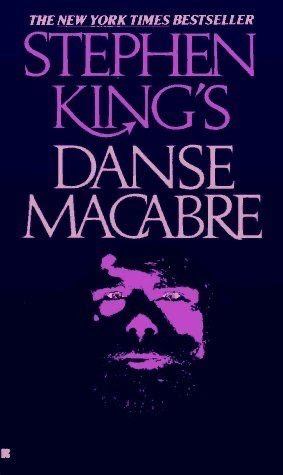
Danse Macabre by Stephen King

 “But on another, more potent level, the work of horror really is a dance — a moving, rhythmic search. And what it’s looking for is a place where you, the viewer or the reader, live at your most primitive level.”

“This is the real danse macabre, I suspect: Those remarkable moments when the creator of a horror story is able to unite the conscious and subconscious mind with one potent idea.” — Stephen King from Danse Macabre 


In Danse Macabre, Stephen King discusses horror fiction in film, radio, television, and in print, focusing on 1950 to 1980. The book begins with a couple of introductory chapters on the basics of horror and an autobiographical chapter. I found the chapter on radio fascinating and the chapters on television and books interesting, but I felt that the chapters on film dragged. Those chapters were a little too long winded for me. 


Levels of Horror 


What I found most interesting were some of the concepts he discusses in the introductory chapters. Instead of trying to define horror he explains how the “genre exists on three more or less separate levels, each one a little less fine than the one before it.” The way he sees it, the finest emotion is terror, where we don’t actually see anything threatening or scary, next comes horror where we do see the threat, and finally revulsion, which goes for the gross out.


The Appeal of Horror 


I also found the reasons he gives for the appeal of horror interesting.


“The answer seems to be that we make up horrors to help us cope with the real ones. With the endless inventiveness of humankind, we grasp the very elements which are so divisive and destructive and try to turn them into tools — to dismantle themselves. The term catharsis is as old as Greek drama, and it has been used rather too glibly by some practitioners in my field to justify what they do, but it still has its limited uses here. The dream of horror is in itself an out-letting and a lancing…and it may well be that the mass-media dream of horror can sometimes become a nationwide analyst’s couch.” 


He adds:


“Horror appeals to us because it says, in a symbolic way, things we would be afraid to say right out straight, with the bark still on; it offers us a chance to exercise (that’s right; not exorcise but exercise) emotions which society demands we keep closely in hand.” 


Talent 


Although he titled his autobiographical chapter “An Annoying Autobiographical Pause,” I found it quite engaging, especially his comments on talent. He states that while having talent is important, it’s not enough just by itself. 


“I think writers are made, not born or created out of dreams or childhood trauma — that becoming a writer (or a painter, actor, director, dancer, and so on) is a direct result of conscious will. Of course there has to be some talent involved, but talent is a dreadfully cheap commodity, cheaper than table salt. What separates the talented individual from the successful one is a lot of hard work and study; a constant process of honing.”


He goes on to say yes, there has to be some talent to begin with, but that what one does with that talent is the key:


“Refining talent is merely a matter of exercise. If you work out with weights for fifteen minutes a day over a course of ten years, you’re gonna get muscles. If you write for an hour and a half a day for ten years, you’re gonna turn into a good writer.” 


In Conclusion 


King gives the plot details of the works he discusses and, in most cases, provides interesting analysis and insight. As he gives lots of spoilers, I skimmed the parts regarding movies and books I want to get to in the future. I thought it was a mostly fascinating overview of horror, but some may find it too detailed. 


There are two appendices at the end. Appendix 1 lists about one hundred films and Appendix 2 lists about one hundred books. In the chapter on fiction, he focuses on the following ten books: 


Ghost Story by Peter Straub 

The House Next Door by Anne Rivers Siddons 

The Haunting of Hill House by Shirley Jackson 

Rosemary’s Baby by Ira Levin 

The Body Snatchers by Jack Finney 

Something Wicked This Way Comes by Ray Bradbury 

The Shrinking Man by Richard Matheson 

The Doll Who Ate His Mother by Ramsey Campbell 

The Fog by James Herbert 

Strange Wine by Harlan Ellison


I’ve read The Haunting of Hill House and Rosemary’s Baby and thought they were both excellent. I have Ghost Story, Something Wicked This Way Comes, The Shrinking Man, and Strange Wine on my shelf. I’ve added the others to my to-read list. 


Monday, October 31, 2022

Books I Read in October 2022

I only read two books last month, one of them being Stephen King’s 600-page Fairy Tale. For October I read one fantasy reference book and shorter horror books that have been on my to-be-read pile.


The Complete Guide to Middle Earth (1979) by Robert Foster


An excellent reference book for the world of the Lord of the Rings. Entries are listed alphabetically. I didn't read every entry, but I used it quite often while watching The Rings of Power.


The Haunting of Hill House (1959) by Shirley Jackson


A classic gothic horror novel. This started out pretty slow then got really interesting. My full review is here: 


We Learn by Writing: The Haunting of Hill House: The Book by Shirley Jackson and the Series by Mike Flanagan


Hammers on Bone (2016) by Cassandra Khaw


Lovecraftian cosmic horror meets hard boiled noir. Private investigator John Persons is hired by a ten-year old boy. The boy says his stepdad is a monster. As the reader soon learns, John Persons knows all about monsters. 


Like most crime noir, things aren’t always as they seem. Things don’t go as planned and our P. I. has to deal with them. It’s a dark story in that it’s cosmic horror but also in that the story comments on domestic violence and abuse. It’s all well done and very creepy. 


While I enjoyed the Raymond Chandler-like hard boiled prose and 50s slang, at times it seemed like it was too much. Also, there’s a reveal in the Interlude that threw me off and made me wonder how reliable the narrator was going to be for the rest of the book. 


I’m up for reading more stories about John Persons. The epilogue seems to set up things to be explored in future stories. I see there is a second book in the series, but John Persons isn’t the central character.


Nothing But Blackened Teeth (2021) by Cassandra Khaw


Five thrill seeking friends rent out an old Japanese mansion for a wedding. It was chosen by the couple getting married because it’s supposedly haunted by a ghost bride.  


I liked the setting and all the references to yokai. Unfortunately, I didn’t really care for the characters. While I liked some of the descriptions and metaphors that were used, there were times where it felt too wordy.


Mapping the Interior (2017) by Stephen Graham Jones 


A modern ghost story that explores loss, grief, and memory. Junior, a young Native American boy, lives with his younger brother and widowed mother in a small house. Junior begins to believe that the ghost of his father is walking through the house wearing full Blackfeet regalia and tries to catch glimpses of him. 


Great opening line. I liked the narration by Junior throughout. The prose was smooth, and the story flowed well. Starts out atmospheric and haunting then moves to creepy.


Night of the Mannequins (2020) by Stephen Graham Jones


A teen prank involving a mannequin doesn’t go as planned. Then the bodies begin piling up. This fast-paced novella was like an 80s horror movie with dark humor. 


This is the second book I’ve read by Stephen Graham Jones and the second time he’s gotten my attention with a great opening line. He then kept my attention with engaging narration from the protagonist even though the story got as crazy and dark as it did. I’m looking forward to reading more of this author’s work.


The Hellbound Heart (1986) by Clive Barker 


A man seeking ultimate pleasure opens a puzzle box that summons beings called Cenobites. Things get bloody. 


Fast paced and creepy. I liked the writing. For example, there are some paragraphs where Barker describes the passing of the seasons that were just lyrical. An interesting contrast to the darker parts of the story. 


This novella was made into the 1987 film Hellraiser


Cycle of the Werewolf (1985) by Stephen King 


Each chapter covers one month of a year in which a werewolf is terrorizing a small town. This was originally planned as a calendar with illustrations by Bernie Wrightson and short vignettes by King, but King decided to expand it into a novella instead. 


The first few chapters set up the story and then as the months pass, we get to know more of the townspeople. The story really gets going in July when we meet young Marty and his uncle. I really liked the interaction between the two. Things get wrapped up rather quickly in the last three chapters, but I enjoyed it. 


Each chapter has three illustrations by Wrightson: a black and white double page spread, a color illustration, and a small b&w spot illustration. The double page spreads that open each chapter are gorgeous. The details are outstanding.


A Night in the Lonesome October (1993) by Roger Zelazny 


Thirty-one chapters of mystery, adventure, horror, and humor, narrated by Snuff the dog. Snuff is the companion to a knife wielding gentleman named Jack. Together they are players in “The Game.” As the story progresses day by day, the reader discovers more players (The Count, the Doctor and his Experiment Man, and the mysterious Larry Talbot being some examples) and more details about “The Game,” leading up to the final confrontation on October 31st. 


This is one of my favorite books. After I discovered it I learned that many people re-read it every October. This was my third read. 


Thursday, September 29, 2022

Fairy Tale by Stephen King

 “There’s a dark well in everyone, I think, and it never goes dry. But you drink from it at your own peril.” — Stephen King, Fairy Tale


Charlie Reade is a high school student who winds up taking care of an old man who lives in a big creepy house with his dog. The old man also has a secret. 


I’ve seen lots of reviews saying that the first third of the book is more compelling than the rest. I felt that way at first but then the story drew me in again. The first third is an interesting mystery and sets everything up. From there the story moves into the fairy tale aspect. It almost felt like a different book from that point, and I think the story slowed down a little. It didn’t bother me. I was just enjoying the ride and it didn’t take long for things to pick up again. If Stephen King’s version of a fairy tale doesn’t click with you, you probably won’t enjoy the book. It worked for me.


It’s not that his version of a fairy tale and the world he created is so astounding, it’s the story, the characters, and the prose. It’s been a while since I got lost in the pages of a really long book. I loved it from start to finish. 


There is one thing that I didn’t like so much. Charlie often mentions old movies, which is fine, but he mentions seeing them on Turner Classic Movies constantly. It’s a minor complaint but it got old after a while. 


Some other things that added to my enjoyment of this book: 


The dedication. It reads, “Thinking of REH, ERB, and, of course, HPL.”


Robert E. Howard is one of my favorite writers. I read the John Carter of Mars and the Tarzan books by Edgar Rice Burroughs when I was in high school and loved them. The first horror book I ever read was by H. P. Lovecraft. 


The chapter illustrations. They’re by Gabriel Rodríguez and Nicolas Delort. I especially like the ones by Rodríguez. He’s the artist for Joe Hill’s Locke & Key. 


The chapter titles. Each chapter is numbered but also includes a few phrases that refer to that chapter’s events. Those hints always kept me interested. It’s done in the style of Victorian novels.


I think it’s interesting how the chapters themselves are organized. They’re broken into numbered sections. In his book On Writing, Kings talks about the difference between books that appear hard to read because of long, packed paragraphs and books that look easy to read, because they have lots of short, concise paragraphs. It seems like the same principle can be applied to chapters. Maybe this is one reason why the book seemed to flow for me. 


I like how King demonstrates his love of reading, storytelling, and language throughout the book. Noir books by Cornell Woolrich get mentioned, as well as fantasy and horror authors Ray Bradbury, H. P. Lovecraft, Clark Ashton Smith, Henry Kuttner, and August Derleth. At one point a place where Charlie is traveling through is so creepy that it reminds him of the vocabulary in Lovecraft books. I also like how language is played with once the story moves into the fairy tale aspect. 


I love that King reminds us that the current versions of classic fairy tales have been watered down from their original forms. I’ve been interested in this topic for a long time. I have a copy of The Original Folk and Fairy Tales of the Brothers Grimm translated by Jack Snipes on my shelf. It’s an excellent collection of the original stories. I haven’t read anything from it recently but now I’m motivated to jump back in. 


Finally, one of the big reasons I liked this book. It stuck the landing. I don’t always enjoy the ending to a Stephen King book or story. I loved the ending to this one. 


Wednesday, June 29, 2022

Ten Things I Learned from On Writing: A Memoir of the Craft by Stephen King

 “The scariest moment is always just before you start. After that, things can only get better.” — Stephen King


I first read Stephen King’s On Writing: A Memoir of the Craft when it was released in 2000. At the time I found the memoir part of the book more interesting than the writing advice. A few years ago, I became more serious about writing regularly so I read it again. During my second read I devoured the writing advice. I highlighted passages and took notes. 


I started this blog shortly after rereading the book. I kept meaning to write a blog post about it but never got around to it until now. So here are ten things I learned from Stephen King’s On Writing: A Memoir of the Craft.


One: “Don’t wait for the muse.”


This is such an important point. I think a lot of us beginners want to wait for motivation to kick in. But if you wait for the muse, that story or book that you want to write probably isn’t going to get written. It’s something that I have to remind myself of regularly. 


If you want to finish something, you have to find a way to write regularly whether you feel motivated or not. This can be challenging though. Life gets in the way. But King has this to say: 


“But you need the room, you need the door, and you need the determination to shut the door. You need a concrete goal as well.” 


Determination and a concrete goal. That requires discipline.


Two: Writing a story is like excavating a relic.


King says, “...stories are found things, like fossils in the ground.” He also says, “Stories are relics, part of an undiscovered pre-existing world.” 


King adds, “The writer’s job is to use the tools in his or her toolbox to get as much of each one out of the ground as possible.”


I found this idea eye-opening and helpful. I’ve never come up with a story idea fully formed and complete. I'm not aware of anyone who has. When I have a story idea it’s rough and unfinished. Writing it down and seeing where it goes is like excavating. By writing it down you uncover hidden layers that can’t be found by just thinking about it.


Finally, he says, “No matter how good you are, no matter how much experience you have, it’s probably impossible to get the entire fossil out of the ground without a few breaks and losses.” 


I found this helpful as well as it’s stopped me from moving forward before. I would give up on stories because what I was putting down on paper wasn't matching the ideas in my head. But you can’t be afraid that your idea may not turn out the way you first thought it would. It’s okay. You have to trust in the process.


Three: You learn by finishing things.


When King first started writing Carrie he gave up. His wife found the manuscript, read it, and urged him to continue writing. It became his first published novel. He has this to say:


“I had written three other novels before Carrie… But none of them taught me the things I learned from Carrie White. The most important is that the writer’s original perception of a character may be as erroneous as the reader’s. Running a close second was the realization that stopping a piece of work just because it’s hard, either emotionally or imaginatively, is a bad idea.”


He learned so much from Carrie, a novel he almost gave up on and did not finish, and he had to finish three novels before that to get there.


You learn by finishing things. 


Four: Write quickly.


King explains that writing quickly allows him to keep up his original enthusiasm and at the same time allows him to “outrun the self-doubt that’s always waiting to settle in.”


As someone who tends to overthink things when I write slowly, I found this really helpful. You’ve got to get it out first. Sometimes when I lose enthusiasm and feel self-doubt creeping in, I use a timer to keep myself from overthinking and to keep myself writing.


This is important because getting the story down is just the first step. 


Five: Revise for length.


When Stephen King was just starting out and getting rejection slips for his short stories, he received this advice with one of his rejections: 


“Not bad, but PUFFY. You need to revise for length. Formula: 2nd Draft = 1st Draft - 10%. Good luck.” 


He explains that applying that feedback helped him immediately. Based on the length of a lot of his novels I wonder if he follows that advice any more though!


In any case it shows that second drafts are important. 


Six: The importance of second drafts.


King shares the advice that newspaper editor John Gould gave him:


“When you write a story, you’re telling yourself the story”, he said, “When you rewrite, your main job is taking out all the parts that are not the story.” 


As someone who was struggling to finish things because I was trying to edit as I was writing, I found this very helpful. Write your first draft as quickly as possible and don’t worry about editing. Save that for the second draft. 


Something else I’ve struggled with is figuring out the themes and meanings of the stories I’m trying to write before I write them. Once again, I found King’s advice eye-opening and helpful:


“Two examples of the sort of work second drafts were made for are symbolism and theme.” 


“Most of all, I’m looking for what I meant because in the second draft I’ll want to add scenes and incidents that reinforce that meaning.” 


“I’ll also want to delete stuff that goes in other directions. There’s apt to be a lot of that stuff, especially near the beginning of a story, when I have a tendency to flail.”


None of this is possible without finishing that first draft. 


Seven: The importance of paragraphs.


King talks about the difference between what he calls easy and hard books:


“You can tell without even reading if the book you’ve chosen is apt to be easy or hard, right? Easy books contain lots of short paragraphs — including dialogue paragraphs which may only be a word or two long — and lots of white space. Hard books, one full of ideas, narration, or description, have a stouter look. A packed look.” 


He adds, “Paragraphs are almost as important for how they look as for what they say, they are maps of intent.” 


I have to agree. It made me realize that the books of a lot of my favorite authors have short paragraphs and short chapters. It’s not true for every author I like but, in most cases, the longer the paragraph and the longer the narration, the harder it is to keep the reader's attention. 


Eight: Stories and novels consist of three parts.


King explains that he believes stories and novels consist of three parts. While these were familiar to me it was helpful to be reminded of their purposes:


“In my view, stories and novels consist of three parts: narration, which moves the story from point A to point B and finally to point Z; description, which creates a sensory reality for the reader; and dialogue, which brings characters to life through their speech.”


Spend too much time on any of these and chances are the reader will lose interest. A good story or novel has a balance between these things. 


Nine: Try anything but toss what doesn’t work. 


King advises trying anything at all when writing but adds that you still need to look at what you’ve written with a critical eye.


“My take on all these things is pretty simple. It’s all on the table, every bit of it, and you should use anything that improves the quality of your writing and doesn’t get in the way of your story. But no matter how you do it, there comes a point when you must judge what you’ve written and how well you wrote it.”  


He adds, “If it works fine. If it doesn’t, toss it. Toss it even if you love it.” 


Ten: “The most valuable lessons are the ones you teach yourself.”


“You learn best by reading a lot and writing a lot, and the most valuable lessons of all are the ones you teach yourself. These lessons almost always occur with the study door closed.” 


A good reminder that the best way to learn is by practicing. I have no problem with reading a lot, but I'm still working on writing a lot. Ever forward.


Four Conan Short Stories from Heroic Legends

Titan Books had a 99-cent sale on a number of their Heroic Legends short stories recently, so I picked up the Conan stories I was missing an...