Showing posts with label horror. Show all posts

Monday, May 20, 2024

Some Short Stories by Adam Nevill

I first became aware of Adam Nevill after I saw the e-book version of Cunning Folk on sale for 99 cents.  When I looked him up I discovered that the folk horror movie The Ritual (2017) is based on his book of the same name. I remember really liking the movie so I went ahead and downloaded Cunning Folk. I still haven’t gotten to it but recently I noticed that the author has two free short story mini collections/samplers available on Amazon, and I downloaded and read those. I’m glad I did as I enjoyed most of the stories quite a lot.


Before You Sleep: Three Horrors by Adam Nevill (Ritual Limited, 2016)


This consists of three stories from Nevill’s collection Some Will Not Sleep


Where Angels Come In (4/5)

Two schoolboys enter an old, abandoned building that is surrounded by urban legends. This grabbed my interest from the start and then just kept going. So creepy. 


The Ancestors (5/5)

A young girl named Yuki, her ghost companion with really long hair, and toys that come out and play at night. This one is even creepier than the previous one. 


Florrie (3/5)

Strange things begin happening after a young man makes plans to renovate the old house he’s moved into. I liked the atmosphere, but I felt that something was missing and that the ending was abrupt.


While I enjoyed the first two stories the most, I liked the writing and the chilling atmosphere in all three stories. 


Before You Wake: Three Horrors by Adam Nevill (Ritual Limited, 2017)


This one includes three stories from his collection Hasty for the Dark


The Angels of London (4/5)

A man down on his luck has to deal with the strange landlord of the seedy lodging house he’s staying at. Atmospheric with some really eerie moments.


Always in Our Hearts (5/5)

A shady taxi driver takes a series of unusual fares around town. What an ending. 


Hippocampus (2/5)

A description of the aftermath of a violent event on a ship at sea. More of a sketch than a story. Well done imagery but I didn’t care for this one.  


I really enjoyed the first two stories. They were set up well, had interesting characters, and had endings that delivered. 


After reading these two mini-collections I can say that I’ve become an Adam Nevill fan. I like his writing style and think four strong stories out of six is a good ratio when it comes to short stories. So I decided it was worth signing up for his newsletter, especially since subscribers are given access to another free e-book. 


Cries from the Crypt - Selected Writings by Adam Nevill (Ritual Limited, 2016)


This free e-book is available to download immediately after subscribing to the author’s newsletter. It includes two short stories, deleted chapters from his novels, numerous interviews, essays, and advice for aspiring writers. One of the essays is his appreciation of A Portrait of the Artist as a Young Man by James Joyce. Reading it at a young age is what made him focus on becoming a writer. I found this intriguing as it’s on my to-read list and I had recently read Joyce’s Dubliners and enjoyed it.


There’s a lot of content for a free book and I found it all interesting. I enjoyed the stories, the interviews and essays gave lots of insight into the author, and I found the writing advice really helpful, especially the chapter on a writing course that he taught at the Birmingham Library. 


The stories:


Little Mag’s Barrow (4/5)

A cut-throat editor in the publishing industry stays in an old cottage in the remote countryside. Things get spooky. After listening to some interviews with Nevill it appears that he made good use of his time in the publishing industry when he wrote this one. 


Estrus (3/5)

A man with an unusual roommate deals with a rat infestation. I think the main character took a little too long to figure things out but, in the end this was another well-done story. 


More Interviews


I’ve also been listening to interviews with Adam Nevill on episodes of the This Is Horror Podcast. I’m finding his discussions on how he comes up with his stories fascinating and I find his story about how he became an author pretty interesting. After starting out being traditionally published he decided to self-publish his work through his imprint Ritual, Limited. I’m looking forward to reading more of his work and I’ve moved Cunning Folk higher up on my to-read list. 


Friday, August 11, 2023

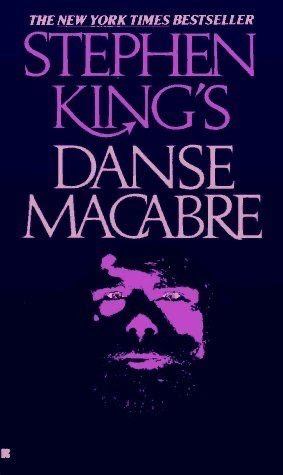
Danse Macabre by Stephen King

 “But on another, more potent level, the work of horror really is a dance — a moving, rhythmic search. And what it’s looking for is a place where you, the viewer or the reader, live at your most primitive level.”

“This is the real danse macabre, I suspect: Those remarkable moments when the creator of a horror story is able to unite the conscious and subconscious mind with one potent idea.” — Stephen King from Danse Macabre 


In Danse Macabre, Stephen King discusses horror fiction in film, radio, television, and in print, focusing on 1950 to 1980. The book begins with a couple of introductory chapters on the basics of horror and an autobiographical chapter. I found the chapter on radio fascinating and the chapters on television and books interesting, but I felt that the chapters on film dragged. Those chapters were a little too long winded for me. 


Levels of Horror 


What I found most interesting were some of the concepts he discusses in the introductory chapters. Instead of trying to define horror he explains how the “genre exists on three more or less separate levels, each one a little less fine than the one before it.” The way he sees it, the finest emotion is terror, where we don’t actually see anything threatening or scary, next comes horror where we do see the threat, and finally revulsion, which goes for the gross out.


The Appeal of Horror 


I also found the reasons he gives for the appeal of horror interesting.


“The answer seems to be that we make up horrors to help us cope with the real ones. With the endless inventiveness of humankind, we grasp the very elements which are so divisive and destructive and try to turn them into tools — to dismantle themselves. The term catharsis is as old as Greek drama, and it has been used rather too glibly by some practitioners in my field to justify what they do, but it still has its limited uses here. The dream of horror is in itself an out-letting and a lancing…and it may well be that the mass-media dream of horror can sometimes become a nationwide analyst’s couch.” 


He adds:


“Horror appeals to us because it says, in a symbolic way, things we would be afraid to say right out straight, with the bark still on; it offers us a chance to exercise (that’s right; not exorcise but exercise) emotions which society demands we keep closely in hand.” 


Talent 


Although he titled his autobiographical chapter “An Annoying Autobiographical Pause,” I found it quite engaging, especially his comments on talent. He states that while having talent is important, it’s not enough just by itself. 


“I think writers are made, not born or created out of dreams or childhood trauma — that becoming a writer (or a painter, actor, director, dancer, and so on) is a direct result of conscious will. Of course there has to be some talent involved, but talent is a dreadfully cheap commodity, cheaper than table salt. What separates the talented individual from the successful one is a lot of hard work and study; a constant process of honing.”


He goes on to say yes, there has to be some talent to begin with, but that what one does with that talent is the key:


“Refining talent is merely a matter of exercise. If you work out with weights for fifteen minutes a day over a course of ten years, you’re gonna get muscles. If you write for an hour and a half a day for ten years, you’re gonna turn into a good writer.” 


In Conclusion 


King gives the plot details of the works he discusses and, in most cases, provides interesting analysis and insight. As he gives lots of spoilers, I skimmed the parts regarding movies and books I want to get to in the future. I thought it was a mostly fascinating overview of horror, but some may find it too detailed. 


There are two appendices at the end. Appendix 1 lists about one hundred films and Appendix 2 lists about one hundred books. In the chapter on fiction, he focuses on the following ten books: 


Ghost Story by Peter Straub 

The House Next Door by Anne Rivers Siddons 

The Haunting of Hill House by Shirley Jackson 

Rosemary’s Baby by Ira Levin 

The Body Snatchers by Jack Finney 

Something Wicked This Way Comes by Ray Bradbury 

The Shrinking Man by Richard Matheson 

The Doll Who Ate His Mother by Ramsey Campbell 

The Fog by James Herbert 

Strange Wine by Harlan Ellison


I’ve read The Haunting of Hill House and Rosemary’s Baby and thought they were both excellent. I have Ghost Story, Something Wicked This Way Comes, The Shrinking Man, and Strange Wine on my shelf. I’ve added the others to my to-read list. 


Friday, May 12, 2023

Old Time Radio, Lights Out, and Arch Oboler

I’m reading Danse Macabre, Stephen King’s overview of horror fiction in various forms of media and I found the chapter on radio interesting. I like old time radio, but it’s been a while since I listened to anything. I’ve mostly listened to episodes of The Shadow, but also a few westerns like Gunsmoke with Robert Conrad, The Lone Ranger, and Have Gun Will Travel


The shows that King discusses sounded pretty interesting, so I decided to give them a listen. I was able to find them included in various Old Time Radio podcasts as well as on YouTube. The length varied from thirty minutes to just a few minutes. 


“You Died Last Night” from Suspense April 1, 1962


The narrator has to convince an alien not to destroy the Earth. Not bad. It reminded me of an old Jack Kirby story from one of Marvel’s monster reprint comics that I read like crazy as a kid. 


When King mentions this episode, he says, “...or the scream at the end of that classic Suspense episode, “You Died Last Night.” But when I listened to the episode, I discovered that it doesn't end with a scream. I believe he got that episode mixed up with one of the Lights Out episodes he mentions later in the chapter (discussed below) because one of those does end in a scream.


“Mars is Heaven” from Dimension X January 7, 1951


King said that he listened to this around age four and that it was his first experience with horror. When men from Earth land on Mars they are surprised to find a town from Earth inhabited by friends and family members who have passed away. Of course, things are not as they seem. It’s a well-done adaptation of the short story by Ray Bradbury.  


King spends the last part of the chapter discussing the work of Arch Oboler who took over the Lights Out radio show in 1936. He has this to say about Oboler:


“...but no discussion of the phenomenon of radio terror, no matter how brief, would be complete without some mention of the genre’s prime auteur — not Orson Welles, but Arch Oboler, the first playwright to have his own national radio series, the chilling Lights Out


I listened to the two episodes King reviews, “Chicken Heart” and “A Day at the Dentist” as well as two other episodes that I read were popular at the time. Wow. 


“Cat Wife” from Lights Out June 17, 1936


This episode stars Boris Karloff as a man with a cruel wife. After she tells him that she only married him for his money he accuses her of being a cat. A transformation occurs and he has to deal with the consequences. At thirty minutes it felt a little long (the others below are all much shorter) but it was so bizarre that it held my interest. From what I could find online it was voted as one of the most popular episodes and was often rebroadcast. 


"Chicken Heart” from Lights Out March 10, 1937


A chicken heart in a lab begins to grow with no end in sight. It’s like The Blob but done in about eight minutes with a darker ending. 


“A Day at the Dentist” from Lights Out March 10, 1937


A man with a toothache arrives at a dentist’s office but something isn’t as it seems. A dark story with some dark humor. This one was like a E.C horror comic


“The Dark” from Lights Out December 29, 1937


A policeman and a doctor are called to a house and find something horrific. This one was the spookiest and had a strong H. P. Lovecraft vibe to it.


Final Thoughts


I enjoyed the heck out of Oboler’s Lights Out episodes. I think that the shorter episodes are stronger but all of them are a step up from other old radio programs. King points out:


“Because he rarely overdid the dialogue-as-description device (as did the creators of The Shadow and Inner Sanctum), Oboler was able to use the natural turn of the mind toward the morbid and the pessimistic to create some of the most outrageous effects ever paraded before the quaking ears of a mass audience.”


The show and the way it’s written and presented is still a product of its time but it's at a different level from that of the other shows. Also, the stories are so original and hold up pretty well (so far) considering that they were written in the late 1930s.  Oboler comes across as the Rod Serling of radio to me. I’m looking forward to listening to more episodes of Lights Out and anything else he’s written. 


Friday, April 14, 2023

The King in Yellow by Robert W. Chambers

 “Very genuine, though not without the typical mannered extravagance of the eighteen-nineties, is the strain of horror in the early work of Robert W. Chambers, since renowned for products of a different quality. The King in Yellow, a series of vaguely connected short stories having as a background a monstrous and suppressed book whose perusal brings fright, madness, and special tragedy, really achieves notable heights of cosmic fear in spite of uneven interest and a somewhat trivial and affected cultivation of the Gallic studio atmosphere made by popular Du Maurier’s Trilby.”

H. P. Lovecraft from Supernatural Horror in Literature 


The King in Yellow is a collection of ten stories by Robert Chambers first published in 1895. The first four stories revolve around a fictional play titled The King in Yellow, which drives people insane once the second act is read. The fifth story is a weird fiction tale which, except for some use of names, seems unrelated to the first four. The sixth is written as a prose poem. The final four revolve around young artists living in the Latin Quarter of Paris, with each one’s title referring to a street. Those four stories were probably based on the author's experiences as an art student in Paris.


I liked the four King in Yellow stories a lot. They were dream-like, atmospheric, and eerie. I see why they are so well regarded, why H. P. Lovecraft was impressed with them, and why they became part of his Cthulhu Mythos. The King in Yellow also shows up in the first season of True Detective, which is where I first heard about it. 


I knew going in that there were only four actual King in Yellow stories, so I was wondering how I was going to like the others, especially after seeing mostly negative comments. I was pleasantly surprised. After some initial hesitation I wound up enjoying most of the other stories as well. It was an odd transition though and I feel that the stories about young artists in Paris would have fit better in a different collection. Then again, if they were in a different collection, I probably would never have sought them out and read them.


I read The Haunted Library of Horror Classics Edition from Poison Pen Press. It includes all the ten of the original stories as well as annotations from co-editor Leslie S. Klinger. If you don’t want to bother with the later stories, Pushkin Press has a slim edition that only includes the first four stories. It’s more expensive than the Poison Pen Press softcover but it’s a hardcover, although rather small. 


The four stories are also available along with the rest of the author’s weird fiction in The Yellow Sign and Other Stories: The Complete Weird Tales of Robert W. Chambers, edited by S. T. Joshi from Chaosium. Petty creepy cover.


I’m fascinated with the different ways authors can influence each other. In Supernatural Horror in Literature, Lovecraft points out that Chambers was influenced by American author Ambrose Bierce, “It is worth observing that the author derives most of the names and allusions connected with his eldritch land of primal memory from the tales of Ambrose Bierce.” 


Chambers borrowed names from two stories, Hastur from “Haita the Shepherd” and Hali and Carcosa from “An Inhabitant of Carcosa.” Both of which I read before starting this book of course. Lovecraft reportedly read The King in Yellow in 1927 and added some elements to his Cthulhu Mythos. Names from The King in Yellow appear in Lovecraft’s 1931 tale, The Whisper in the Darkness. 


The Stories:


“The Repairer of Reputations”


Hildred Castaigne reads The King in Yellow while recovering from a head injury. Afterwards he associates with Mr. Wilde, an eccentric man known as “The Repairer of Reputations” who he believes can help him become the King of “The Imperial Dynasty of America.” There’s a lot going on in this story and Chambers pulls it off brilliantly. 


“The Mask”


A sculptor (mentioned briefly in the previous story) creates a solution that can turn any living thing into marble. A mysterious solution and love triangle. This story felt like a dark fairy tale.


“In the Court of the Dragon”


A man who has been reading The King in Yellow attends a sermon at his favorite church. He leaves after he sees a sinister looking organist but then finds that the organist is following him. Chilling.


“The Yellow Sign”


Artist Mr. Scott (seems to be Jack Scott from The Mask) is repelled by a watchman he sees in a nearby churchyard. The descriptions of the watchman are just one of the highlights of this story. His model Tessie has morbid dreams about a hearse. Excellent escalation of tension and dread culminating in a powerful ending. 


“The Demoiselle of d’Ys”


An American hunting in the Brittany region of France gets lost in the moors. He meets a young woman named Jeanne d’Ys and she takes him to her home. A beautifully told story. 


The name d’Ys caught my attention. It reminded me of one of the first import RPG video games that I played, Ys I & II, a compilation of Ys I: Ancient Ys Vanished and Ys II: Ancient Ys Vanished - The Final Chapter. I liked the music so much that I bought the soundtrack.


In M. Grant Kellermeyer’s summary and analysis of “The Demoiselle of d’Ys” (available to read on the OldStyle Tales Press website) he has this to say:


 “One of the Breton legends that fascinated Chambers was the story of the City of Ys, a mythical metropolis that was built below sea level on the coast, where the sea was held back by towering dikes. Like Atlantis, Sodom, and — less mythically — Pompeii, Ys was known for its decadence and for its catastrophic destruction.”


He goes on to say, “While Chamber’s tale has little to do with the actual myth of Ys, the themes of both stories are consistent…” I’ll stop there as the rest of the quote includes spoilers. 


“The Prophet’s Paradise”


This one is told in a series of poetic-prose sections. I didn’t care for it as I couldn’t make much sense of it. 


“The Street of the Four Winds”


A poor artist feeds a cat that shows up. When he discovers who it belongs to he attempts to take it back to its owner. More of a sketch than a full story but I enjoyed it. 


“The Street of the First Shell”


This is a love story set during the Franco-Prussian war. Trent is an American in Paris trying to remain safe with other struggling artists during the Siege of Paris. The story is told in four parts. I loved the writing in the opening paragraphs but then I lost interest quickly. A revelation at the end of part two regained my interest a little. Then part three grabbed me and really pulled me back in. 


Trent joins the defenders of Paris and takes part in a chaotic and intense battle in fog. It’s one of the best depictions of a battle that I’ve ever read. I felt like I was reading one of Bernard Cornwell's Richard Sharpe novels. Next, I was in suspense all throughout the fourth part and couldn’t wait to get to the end. I almost gave up on this story but now I’m glad that I didn’t.


“The Street of Our Lady of the Fields”


A naive American art student arrives in Paris. He falls for a young woman who acts strangely when he shows interest in her. She tells him not to speak of her to the other students. While it’s melodramatic and corny I thought the ending had such raw emotion. Sometimes I’m just a sentimental fool I guess.


“Rue Barrée”


Art students vie for the affection of a young lady they pass by regularly. They name her after the street Rue Barrée as they don’t know her name. I didn’t care for this one as the main character makes some odd choices and the ending didn’t work for me. 


The Hastur Cycle 


After The King in Yellow, Chambers wrote mostly romantic and historical fiction. He returned to weird fiction later in his career but apparently those later works didn’t have the same impact. While it’s a shame Chambers didn’t write further King in Yellow stories, other authors have written stories in what has become to be known as the Hastur Cycle. 


Hastur Cycle stories can be found in The Hastur Cycle: 13 Tales that Created and Define Dread Hastur, the King in Yellow, Nighted Yuggoth, and Dire Carcosa, edited by Robert Price from Chaosium. It includes thirteen stories from a variety of authors. Besides Bierce, Chambers, and Lovecraft, authors included are Karl Edward Wagner, James Blish, Arthur Machen, Richard A. Lupoff, Ramsey Campbell, James Wade, August Derleth, Joseph Wayne Brennan (2nd edition only) and Lin Carter. 


Final Thoughts


I wasn’t familiar with the book Lovecraft mentions in the opening quote, Trilby by George du Maurier. But it turns out that I am familiar with one of the characters, the rogue, musician, and hypnotist Svengali. I just never knew his origins. 


I was so drawn into the world of The King in Yellow stories that I didn’t really notice anything else. It wasn’t until the later stories about the young artists that I noticed how lyrical Chamber’s prose could be. It made me realize how much I like his writing. While I enjoyed the weird fiction stories the most, I’m glad that I read the entire collection.


My Story Ratings:


The Repairer of Reputations (5/5)

The Mask (4/5)

In the Court of the Dragon (4/5)

The Yellow Sign (5/5)

The Demoiselle of d’Ys (5/5) 

The Prophet’s Paradise (2/5)

The Street of the Four Winds (3/5)

The Street of the First Shell (3.5/5)

The Street of Our Lady of the Fields (5/5)

Rue Barrée (2/5)


Books and Comics I Read in June 2026

Between a busy month at work, making plans for a much-needed vacation, driving halfway across the US and back (more details to come in an up...